
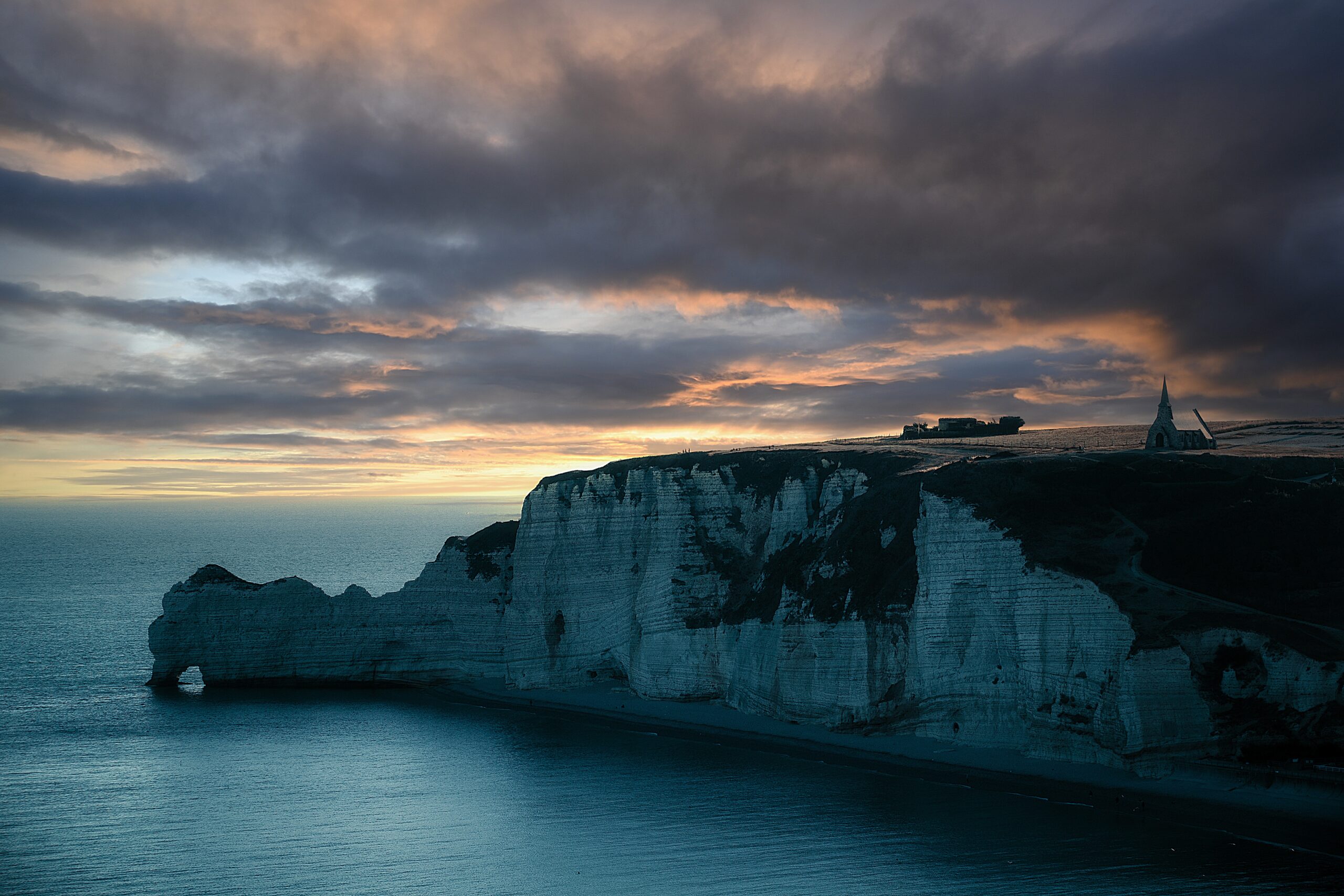
France stands as perhaps the most accomplished example of dechristianization in the modern world. Faith here seems almost dead, replaced by a secular religion firmly anchored in leftist ideals and values. It has struck home so far: abortion is not only a right but a mainstream practice, with a quarter of a million performed each year; euthanasia has been legalized; same-sex marriage is the law of the land.
Yet this leftist, progressive, anti-Christian faith is showing cracks. It promised happiness and pleasure but often delivers mental illness and disarray. It claimed to be a path to wealth and success but often leads to economic hardship—empty fridges are becoming increasingly common in French households. As human nature endures, people quietly begin to search elsewhere. When one God fails to deliver, another is sought.
The Catholic revival in France is emerging in this context. Conversions are steadily rising: +28% in 2023 and +30% in 2024, with 12,000 baptisms in 2024. Pilgrimages to Chartres have nearly doubled from 2019 to 2025, with most pilgrims aged 20 to 34. Catholics are less hesitant to express devotion to Jesus, unafraid of being bullied. The rising visibility of Islam may play a role: if a young Muslim girl can wear a veil openly in Paris, why shouldn’t a young Catholic girl wear a cross? According to IFOP, there are three practicing young Muslims for every practicing young Catholic in France, and the revival can be seen as a reaction to the country’s growing Islamic presence.
Yet there is a paradox: the official Church appears largely indifferent. It distances itself from grassroots revival, showing neither enthusiasm nor initiative. The Catholic hierarchy is more comfortable with the elite circles of Davos than with anti-abortion activists. It might offer sanctuary to Rachid, an undocumented Muslim fleeing a police raid, but hesitate to help Antoine, an anti-immigration activist in a similar predicament. There are Catholic believers, but there is no Church in mission. The revival thrives independently, without guidance or direction, leaving it vulnerable to missteps or hijacking.
Is there any chance the Catholic surge will be useful to the religion per se and to the country?
The risks of an unguided revival
Any religion risks sectarianism and insularity. Without proper guidance, the Catholic revival could degenerate into a narrow identity movement—narcissistic, superficial, and socially ineffectual.
There are two kinds of identities, the easy one and the hard one. The easy one is built on the skin color and a formal allegiance to a creed or an ideology. The hard one is built on a project, it is never fully granted, it is always a challenge. The harder the mission, the more admirable the outcome. Catholicism belongs to the second category. It demands a lot but in doing so it makes better people. In other words, Catholicism brings significant value to society. It cannot emulate the LGBT and feminist movements which are based on easy identities. If so, it will miss one of its key vocations and become a lobby or a networking club for white people masquerading as a religious movement.
Catholicism as mere identity could serve as a defensive bunker against Islam or immigration, a counter-society obsessed with demographic shifts and a mere reservoir of votes for the so-called populist right. Yet, France needs more than that. The task is not only to resist Islamization but to rejuvenate the French spirit, restore the nation’s “génie français,” and reclaim its cultural vitality. The threat is not only external—it comes from within, from citizens who have surrendered to mediocrity. Catholicism must play a pivotal role in a broader civilizational renaissance, restoring self-respect, hope, discipline, and a sense of the common good. Catholicism can also act as an antidote to the aesthetic decay of a nation without God. A few minutes in a Spanish or Italian church are a restorative therapy for the soul, exposed to the brutal horrors of modern Paris and London.
The revival is also exposed to trivialization and fashion. Crosses are tattooed on young women as mere accessories. Social media abound with religious icons designed to attract likes and views. At its core, the revival needs guidance. The current generation is weary of “Liberty” and craves firm rules, a solid foundation in a world that often feels like a turbulent ocean. Without leadership, anyone with ambition and a hidden agenda could redirect the movement toward secular priorities. Many grassroots Catholic movements in the twentieth century, and even today, resemble progressive NGOs more concerned with refugee policies than with salvation. Some drift toward self-help and soft-skill development, but God is not a life coach; He is the sovereign. Catholicism is about salvation and redemption. It is a survival manual for the soul.
The American (counter-)model offers useful lessons. In the United States, the Christian revival failed to stem the “woke” tsunami that nearly undermined the national psyche. It was political intervention—not churches or pastors—that proved effective. Belief alone is insufficient; spiritual energy must be guided and channeled.
Catholicism in France is like a tree trunk long thought dead. After cruel, systematic pruning, a concrete slab was even laid upon it to ensure it would never rise again. This slab was made of secularization (laïcité), consumption and mass migration (i.e. Islamization).
But life still pulses within the buried stump. Here and there, shoots and sprouts are growing, in a disordered but promising revival. It lacks a gardener, a wise and friendly one, who could cut the stems that have no future and nurture the one, the only one, who could make for a vigorous and upright trunk.
Innocents at war
In the lack of the gardener, the offsets are likely to give birth to weak shrubs bearing a remote resemblance to the splendid tree they will never be. These bushes are far too fragile to resist the evil forces that would like to cut them down.
As a matter of fact, the current times are intensely antichristian. The whole power system is made to fight Jesus, consciously or unconsciously, directly or indirectly. Under the guise of tolerance and plurality, many biblical teachings have been outlawed. Christianity is dissidence and every dissidence is dangerous. One can face trial for condemning sodomy or lose his job for making the case for a Christian version of the family. Soon, a social justice warrior disguised as a prosecutor would ask to ban the Bible for misinformation. After all, claiming that a virgin can give birth is fake news, and fake news is considered the work of evil people in today’s doxa, so it needs to be fought…
While the global establishment is stuck in the mud of the Epstein files, his minions in the mainstream media still denigrate the church for pedophilia, as if the abuse of power was the monopoly of Catholics.
The world is unprepared for Christ. It has never been. More than ever, any Catholic surge would face ferocious resistance. Martyrs and scapegoats are inevitable. The Western decadent establishment will react to any perceived threat to its vow of total spiritual control. There is a spiritual war going on, and France is at its epicenter. Christ “lost it” in 1789, and getting it back won’t be a pleasant journey.
Are the converts aware of it?
Becoming Catholic today in France is to step into a spiritual battlefield and get ready to fight, bleed, and suffer. The war is within each one’s soul and also amid society: at the workplace, in the family, in the streets, etc. Yet this war risks being lost without capable leaders, ones attuned to the nature of the conflict ahead and fearing God more than Hollywood or Davos.
Originally published in The Salisbury Review.


Leave a Comment